Paediatrics
Nine subspecialties, a surge, and four-hourly examinations
2025 — 2026 · Hospital Enrique Cabrera · Havana, Cuba
In one paragraph
A paediatric internship at Hospital Enrique Cabrera comprising structured exposure across nine paediatric subspecialties while holding a 1-in-4 emergency call schedule. The rotation was defined by a season of significantly elevated arboviral infection on the general paediatric ward, which pushed acuity to the point of requiring serial physical examination of infants at four-hour intervals and frequent transfers to the paediatric intensive care unit. On call: rapid triage and risk stratification, weight-based nebulised salbutamol in acute asthma, and systematic examination of the acute paediatric abdomen to separate surgical from non-surgical causes.
Breadth and frontline, at the same time
Nine subspecialties plus a 1-in-4 emergency call rotation is, in practical terms, the closest approximation a training programme can offer of what independent paediatric practice actually feels like: enough breadth that nothing is entirely unfamiliar, and enough frontline volume that the breadth has to be usable at three in the morning rather than merely known.
The arboviral surge
For a substantial part of the rotation, the general paediatric ward was running an arboviral surge. Acuity escalated to the point where the ward protocol required serial physical examination of infants at four-hour intervals, with frequent PICU transfers for clinical deterioration.
That regime is where the actual test is, and the test is not knowledge. It is whether the fourth examination of the night is as complete as the first, on the twelfth infant who looks like the eleven before her. Compressing the assessment to save time is the obvious failure. The less obvious one — and the more dangerous — is allowing familiarity with the presentation to blunt your attention to the individual child in front of you.
I did not compress them. Where a patient of mine required PICU transfer, the handover was structured, complete and delivered without embellishment, so the receiving team could act on it directly rather than re-derive it. The quality of a paediatric handover under load is a fair proxy for the quality of the person producing it.
On call
Rapid paediatric triage and risk stratification of incoming presentations. Two case patterns recurred:
Presentation | Management |
Acute asthma exacerbation | Calculated and administered weight-based nebulised salbutamol — dosed to the specific weight of the child in front of me rather than to a memorised default. |
Acute abdominal pain | Systematic examination designed specifically to differentiate surgical conditions — acute appendicitis foremost — from non-surgical aetiologies. Where the examination was equivocal, the child was not discharged. |
On the second of those: an equivocal paediatric abdomen at three in the morning is the single most common way a child goes home and comes back worse. My rule was to stabilise, initiate early management, and hand the case to the attending specialist with a concise clinical summary — rather than to resolve my own uncertainty by discharging it.
The part that is not a skill
Paediatrics is unusual among the disciplines in that it asks for three things simultaneously and in real time: reassure a frightened parent, communicate calmly with a distressed child, and reason clearly about a differential that in a small patient can move from stable to critical inside an hour.
Most people can do two of those three at once. The third is always the one that slips, and which one slips tells you what kind of clinician someone is under pressure.
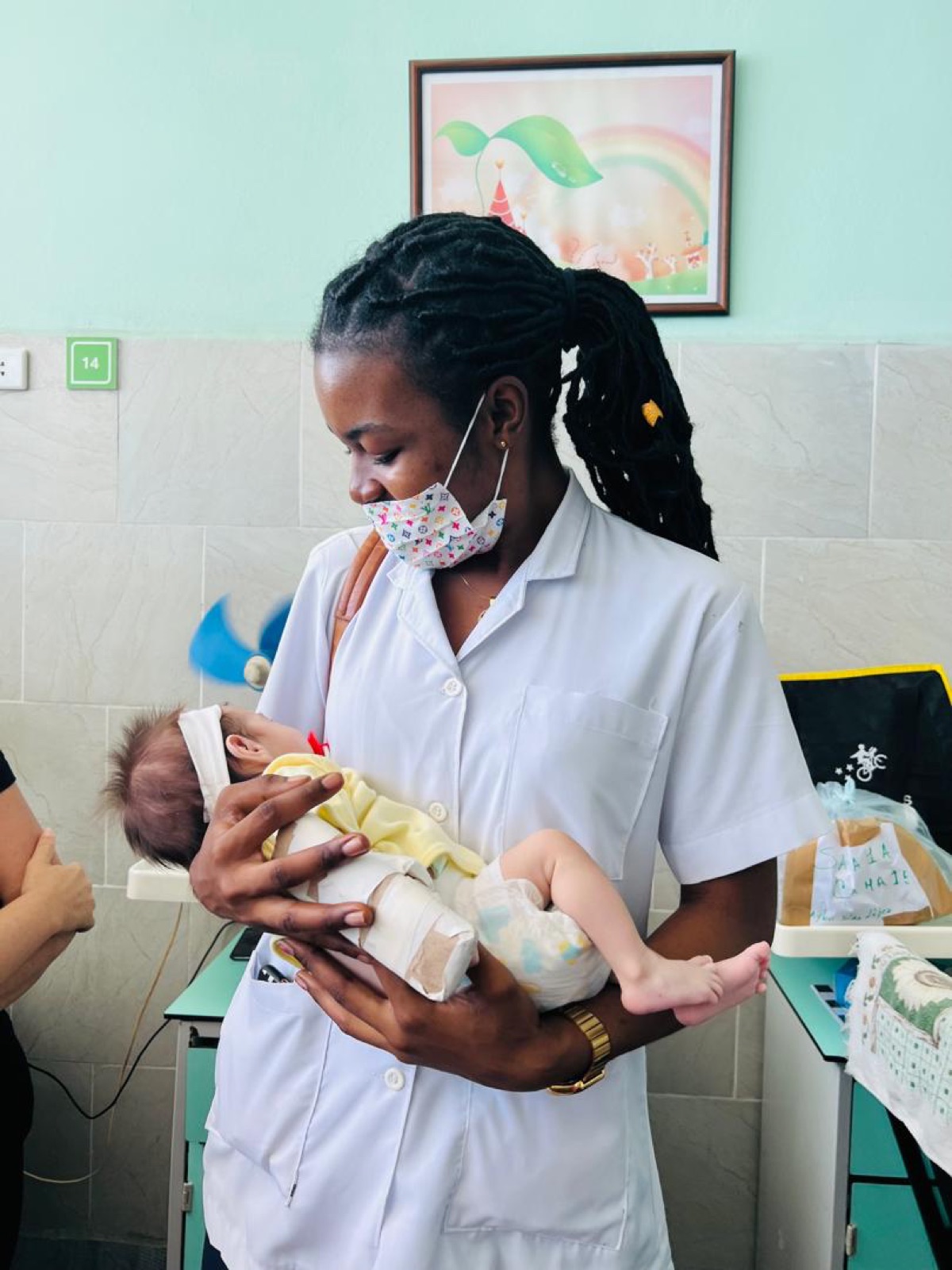
It is also not a soft skill, and I want to be exact about why. The physician who is not trusted by the parent will not get the history she needs to make the diagnosis, and the diagnosis will suffer for it. Reassurance in paediatrics is a diagnostic instrument.
Where this connects to everything else
My community panel at CMF-4 included eight paediatric patients under routine well-child follow-up, with age-appropriate psychomotor development and milestone attainment documented in a way that permitted meaningful comparison across visits. Those are the same children, seen at the other end of the same system — before anything is wrong, in their own homes.
Ward paediatrics is what happens when that end of the system has already failed. Doing both in the same year is the most useful thing my training gave me.
What I took from it
Procedural precision that does not slip under acute load, and clinical composure that holds through the third and fourth hour of a difficult call — held together by the willingness to keep examining a child properly on the night when every child looks the same.