Internal Medicine — Ward C
Six patients a morning, a hundred a shift, and the case I still think about
2025 — 2026 · Hospital Enrique Cabrera · Havana, Cuba
In one paragraph
For the 2025–2026 internship year I held the daily clinical management of Ward C at Hospital Docente General Enrique Cabrera — six admitted patients under my primary evaluation — while carrying a 1-in-4 call rotation in the internal medicine emergency unit, where the daily volume averaged around one hundred encounters. On the ward the work was serial examination and knowing each patient's trajectory better than anyone else on the team by the time rounds began. On call it was hypertensive emergencies, viral hepatitides, urinary tract infections, and an arboviral season that at its peak accounted for roughly ninety percent of the department's census. It is also where the case happened that I think about most.
The service
Ward C is a general internal medicine ward. The intern who holds it is expected to examine every patient on the list each morning, review the overnight events with the nursing staff before rounds, and present changes at handover in a structured, prioritised order. That responsibility is not ornamental. If a deterioration is going to be caught on a general medical ward, it is going to be caught by the person who was in the room at seven in the morning.
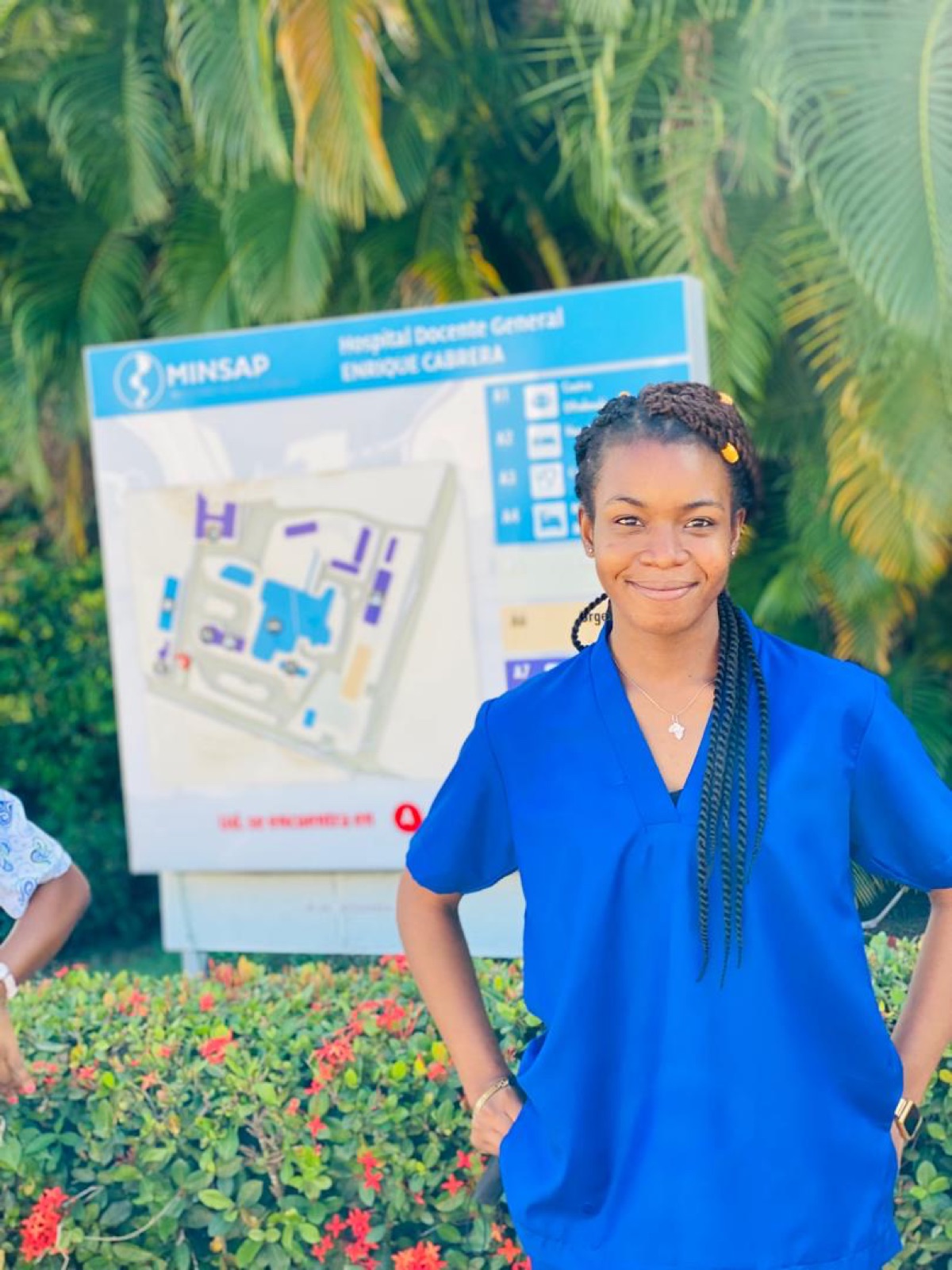
I examined each of my patients thoroughly every morning, and I documented in a way that let the next shift compare today against yesterday rather than start again. That sounds procedural. It is the entire mechanism by which slow deterioration becomes visible at all.
The case that defined the rotation
An eighty-year-old woman on my ward list. On the chart, stable. During the routine morning evaluation I found early markers of acute clinical deterioration — subtle enough that they would have been easy to explain away, and easy to leave until the afternoon handover.
I did not leave it. I initiated preliminary stabilisation measures, reassessed the vital signs myself, and escalated to the specialist with a structured summary. The multidisciplinary committee reviewed her the same day and the team intervened within minutes rather than hours.
What impressed me was not the diagnosis; it was the willingness to interrupt a senior physician on the strength of a finding she could not yet fully justify. — Prof. Lisette Rodriguez Phinevy, Department of Internal Medicine
I want to be precise about why this is the case I lead with, because the diagnosis itself was not difficult. What was difficult was the thirty seconds I spent deciding whether to raise it. Raising it meant being briefly inconvenient to a senior physician on the strength of something I could not yet justify. The cost of being wrong about that was embarrassment. The cost of being right and waiting was her. I have never since found that calculation close.
The emergency unit
Internal medicine emergency, 1-in-4, roughly one hundred patients a shift. The case-mix was the whole spectrum an internist is expected to carry at the front door:
Hypertensive emergencies — including acute decompensation with pulmonary congestion.
Viral hepatitides — diagnosis, staging, and the counselling that comes with them.
Urinary tract infections — the volume diagnosis, and the one where familiarity does the most damage.
Endemic febrile illness — during one severe seasonal surge, arboviral infection accounted for roughly ninety percent of the ED census.
That surge is worth dwelling on, because volume of that kind is a test rather than a workload. When ninety percent of the people in front of you have the same thing, three failures become available at once: you begin to triage carelessly, you defer fluid resuscitation decisions because they are tedious, and you become short with patients whose presentation is by now thoroughly familiar to you. The tenth percent is where the mortality lives.
The discipline I held onto was mechanical rather than heroic: the same examination sequence on the hundredth patient as on the first, and an explicit fluid decision made and written down rather than postponed.
Procedures and critical care
I was an active member of the multidisciplinary resuscitation teams during Advanced Cardiac Life Support events, including a resuscitation for a patient who arrived in cardiac arrest and subsequently recovered.
Procedure | Context and level of independence |
Emergent orotracheal intubation | Multiple, for patients in acute respiratory failure requiring mechanical ventilation, as part of the resuscitation team. |
Diagnostic and therapeutic paracentesis | Performed independently, on patients presenting with tense symptomatic ascites. |
ACLS resuscitation | Active member of the multidisciplinary team; participated in a cardiac-arrest resuscitation with survival to recovery. |
Pharmacologic stabilisation in hypertensive emergency | Initiated without immediate specialist support and bridged to follow-up (see below). |
Off hours, without a specialist in the room
A patient presented in hypertensive emergency — blood pressure 220 over 120 — with signs of acute decompensated heart failure and pulmonary congestion. There was no immediate specialist support available. I initiated appropriate pharmacologic stabilisation, established haemodynamic monitoring, and successfully bridged the patient until specialist follow-up.
This is the case my supervisor cited as the point at which she considered my clinical maturity established, and I include it for one reason: it is the version of the story where the delay does not happen. Somebody was there, and knew what to do, and did it at the hour it needed doing. That is the entire distance between this patient's night and my father's.
What I took from it
Internal medicine is the specialty in which the decisive moment is usually quiet and usually early. There is rarely a dramatic point at which a ward patient becomes critical; there is a morning on which the change was findable, and a morning on which it was not.
So the skill I was actually training is not diagnostic. It is the willingness to act on an incomplete finding, immediately, at the cost of looking uncertain in front of someone senior. Everything else on this page is downstream of that.