General Surgery
Twenty-four-hour call, the acute abdomen, and the operating suite
2025 — 2026 · Hospital Enrique Cabrera · Havana, Cuba
In one paragraph
General surgery at Hospital Enrique Cabrera on a 1-in-4, twenty-four-hour emergency call schedule. The work divided cleanly in two: at the front door, distinguishing rapidly between minor soft-tissue presentations and life-threatening acute abdomens; and in theatre, first-assisting on complicated appendicitis, major oncological resections, and — more than once — emergent open repair of a ruptured abdominal aortic aneurysm. In between, primary closure of complex traumatic lacerations and incision and drainage of severe soft-tissue abscesses, performed independently. The rotation's defining case was a perforated peptic ulcer.
The service
Surgery sorts interns faster than any other rotation, and it does it within the first several calls. It rewards two things that are not the same: diagnostic composure under time pressure at the front door, and technical composure at the table. An intern can have either without the other, and the rotation exposes which one is missing very quickly.
On any given twenty-four-hour shift I was expected to evaluate a broad spectrum of surgical pathology and, more consequentially, to sort it — because in an acute abdomen the immediate survival of the patient frequently depends on how long the sorting takes.
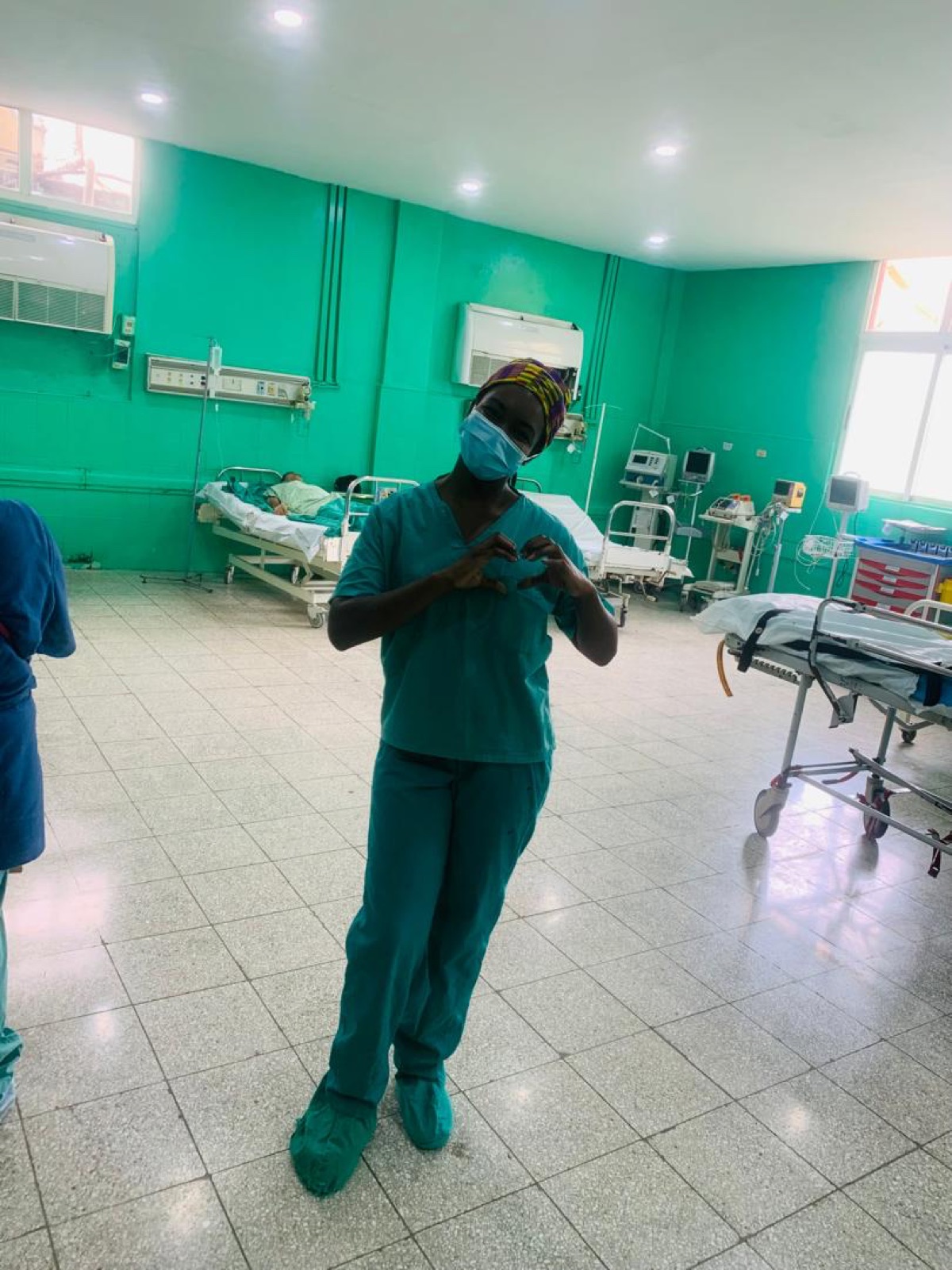
The case that defined the rotation
A patient presented in severe distress. I recognised the clinical and radiological signs of a perforated peptic ulcer, completed a focused workup, and communicated the findings with enough clarity and conviction that the attending team was able to expedite an emergent exploratory laparotomy. The patient recovered.
In a perforation the interval between suspicion and theatre is very nearly the whole prognosis. She shortened it, and the patient recovered. — Prof. Walfrido Castillo Su, Department of General Surgery
I do not want to overstate the technical difficulty of the diagnosis. A perforation is not a subtle radiological finding once you are looking for it. What the case required was something else: the confidence to commit to a serious call in front of a senior team, and the judgement to recognise that in a perforation, hesitation is the more dangerous option — not a neutral one.
That is the same calculation as the eighty-year-old woman in Ward C, in a specialty where the clock runs faster.
Bedside procedures, performed independently
These were routine rather than exceptional, which is the point — the confidence to do them without waiting for supervision beyond initial verification is what makes an intern useful on a busy call rather than an additional thing to manage.
Procedure | Detail |
Primary closure of complex traumatic lacerations | Routine, independent. Approached methodically, with attention to sterile technique and to the specific tissue conditions of the individual wound rather than a standard closure. |
Incision and drainage of severe soft-tissue abscesses | Routine, independent, beyond initial verification. Post-operative results reviewed in clinic were clean and healing appropriately. |
Focused acute-abdomen workup | Front-door triage across a full 24-hour call: separating minor soft-tissue presentations from surgical emergencies. |
In the operating suite
First assist across elective and emergent cases:
Complicated, gangrenous appendicitis — laparoscopic and open, including a major successful operation on a complicated presentation.
Major oncological resections — cases requiring careful anatomical planning ahead of the incision.
Emergent open repair of ruptured abdominal aortic aneurysm — on more than one occasion. A case category in which the cohesion of the team, and the confidence of every member of it, is the difference between recovery and mortality on the table.
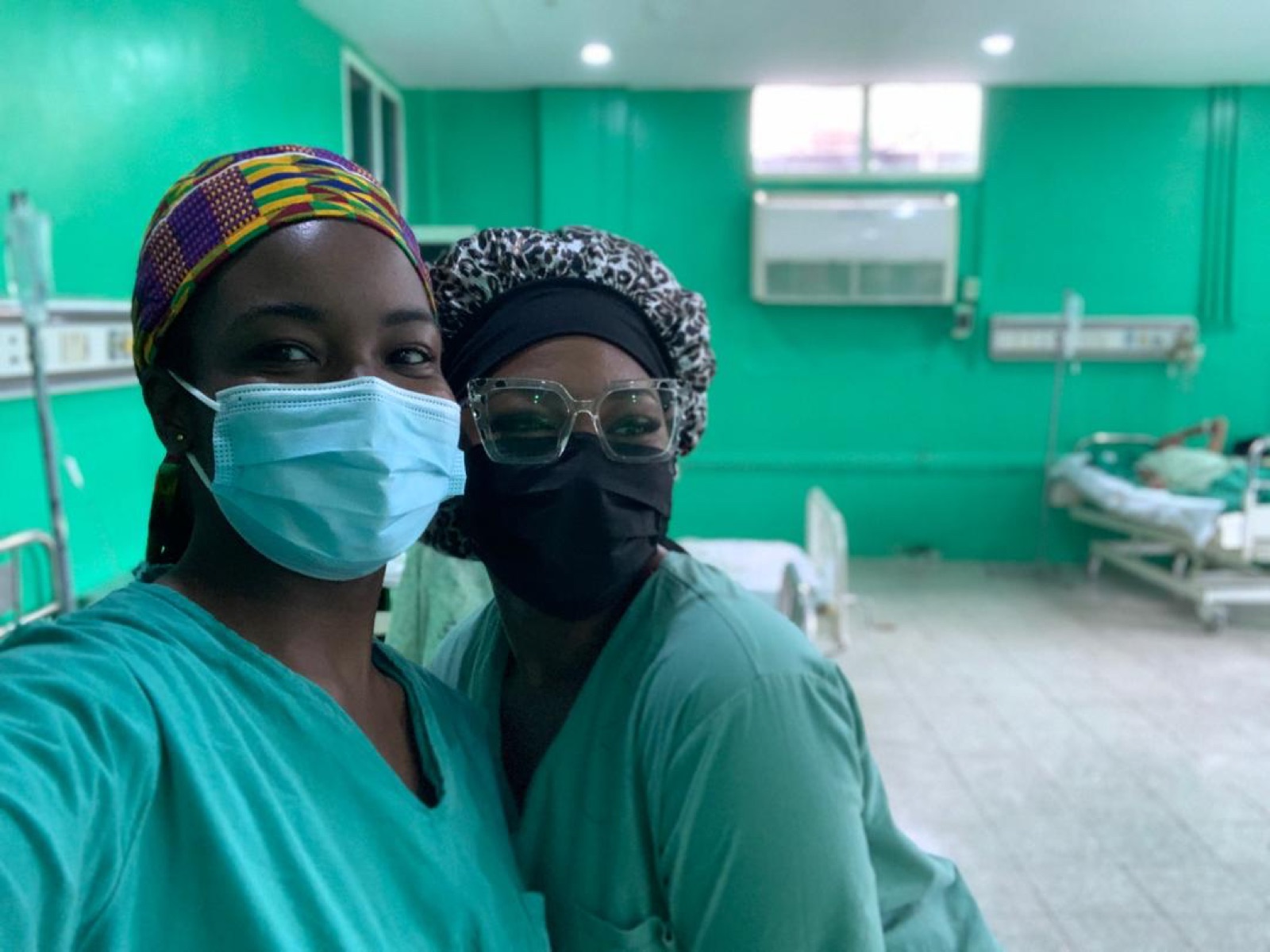
What first-assisting actually asks of you
The measure of a first assist is not whether you know the anatomy. It is whether the instrument is where the surgeon's hand is going before the surgeon asks for it, whether your communication with the anaesthetic team is measured and correctly timed, and whether your composure holds when the field opens and there is more blood than expected. Those are the three things that separate a member of a surgical team from an observer standing in scrubs.
Why surgery, specifically
My father's legs were crushed in a road collision in Ghana when I was a schoolgirl — femur, tibia, and foot. He was moved between hospitals that could not manage the injury, and the reconstruction he eventually required had to be performed by a surgeon brought in from outside the country. He spent close to two years in surgery and rehabilitation learning to walk again.
I do not offer that as an anecdote about hardship. I offer it as a description of a gap: the operation my father needed existed in the world, but not where he was lying. In my experience the most durable reason a person becomes a surgeon is not attraction to the theatre. It is an intolerance of the distance between what is possible and what is available.
What I took from it
Standing at the table taught me what I take to be the essence of the discipline, and it is three things rather than one: composure under pressure, anatomical precision, and an unwavering commitment to rapid, decisive patient care.
The third is the one that transfers. Surgery, more than any other discipline, requires a physician who will make a decision, own it, and act on it — under time pressure, in front of a critical patient, and usually with imperfect information. That is a temperament as much as a skill, and it is the one I most want to be trained further in.