Family Medicine — CMF-4
Fourteen families, door to door, every fortnight
2025 — 2026 · CMF-4 · Policlínico Presidente Allende, Havana
In one paragraph
Direct clinical responsibility for a panel of fourteen local families at Consultorio del Médico y la Familia No. 4, under the Policlínico Presidente Allende. Within that panel: five obstetric patients, eight paediatric patients and ten geriatric patients in longitudinal follow-up, with a scheduled outpatient volume of five to six encounters a day — deliberately paced so no visit was compressed into a triage encounter. Every one of the five obstetric patients was enrolled in prenatal care before twenty weeks' gestation. Every fortnight I reviewed the whole panel house to house.
What the Cuban model actually is
This is the rotation I came to Cuba for, and it is the one that most people outside the system misunderstand. Family medicine here is not a clinic that happens to be nearby. The physician is stationed inside the community, holds a defined population, and is expected to know that population before it becomes ill — by name and by address.
For someone whose entire question was why it took so long for anyone to reach her father, that is not an interesting curricular feature. It is the answer to the question, implemented.
The panel
Cohort | Size | What it required |
Obstetric | 5 | Enrolment in prenatal care before 20 weeks in every case, then structured antenatal surveillance throughout. |
Paediatric | 8 | Routine well-child visits with attention to age-appropriate psychomotor development and milestone attainment, documented for comparison across visits. |
Geriatric | 10 | Chronic disease management, polypharmacy review, and the environmental risks that only show up in the home. |
Fourteen families is a small number and a demanding one, because the case-mix requires moving fluently between developmental surveillance, antenatal care and chronic disease in older adults — often within the same afternoon, and sometimes within the same household.
On pacing
Five to six scheduled encounters a day is a deliberately unhurried list. Interns arriving from hospital rotations find this difficult, because hospital medicine trains you to compress: the ward taught me to get what I needed and move. A family medicine visit compressed into a triage encounter is not a shorter visit — it is a different and much less useful thing, and continuity between visits is the first casualty.
Before twenty weeks
All five obstetric patients were enrolled in prenatal care before twenty weeks' gestation. On paper that reads as an administrative metric. It is not.
Reliable pre-twenty-week enrolment requires the physician to know which of her patients are pregnant before those patients present. You cannot achieve it from behind a desk, by waiting. It is a direct measurement of whether the doctor is genuinely present in the community — and it is the single number on this site I am most attached to, because it is the one that would have mattered most in the district my family is from.
Bi-weekly house-to-house screening
Active medical screening across the assigned families, every fortnight. The practice is expected of the family physician in the Cuban model; how meaningful it is depends entirely on the person doing it, and it is perfectly possible to do it perfunctorily.
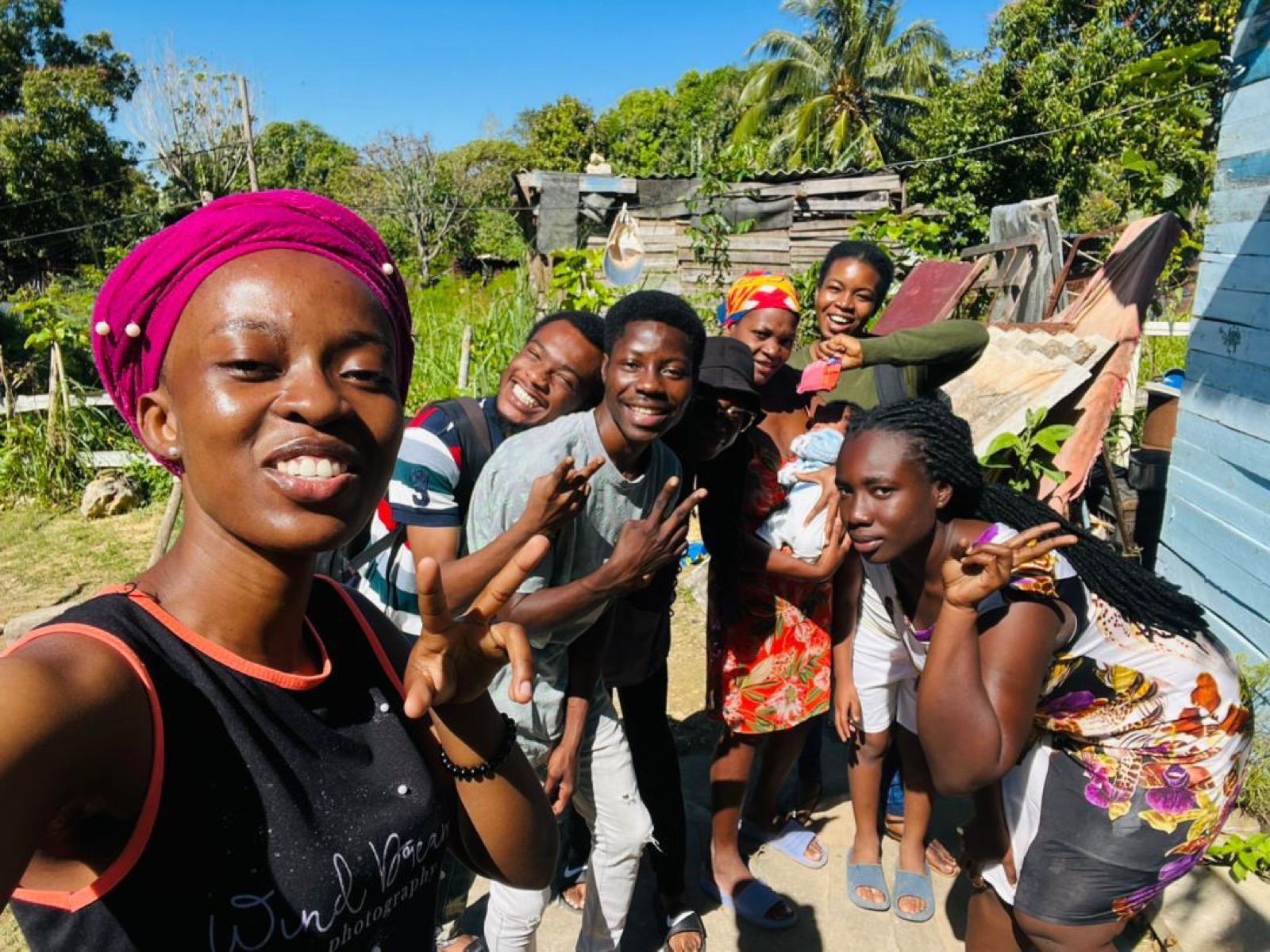
I used the visits to find latent health risks that had not yet produced a clinic presentation, and to deliver preventive interventions in the physical setting where they would actually be applied. The recommendations that came out of them were specific to the household rather than to the textbook:
The arrangement of a bathroom for an elderly patient at risk of falling — where the rail needed to be, not that a rail was advisable.
The storage of medications in a home with young children.
The ventilation pattern of a room where an obstetric patient had begun to experience respiratory symptoms.
Advice of that specificity is only possible when the physician has been in the room. And the patients trusted it because I had been.
Going to find the patient who has not come
This is the point I would most want understood about primary care, and it is the one my supervisor made independently in his letter.
The distinguishing skill is not the management of the patient in front of you, at which any competent intern will perform adequately. It is the capacity to go and find the patient who has not come. — Dr. Jorge Félix Pedrón Leyva, CMF-4
The elderly woman who has quietly stopped attending. The pregnant patient whose partner has moved her out of the district. The child whose vaccination has slipped by six weeks and then by six months. None of them will ever appear in a clinic's throughput statistics as a problem, and all of them are the reason the statistics look acceptable.
What I took from it
Hospital medicine taught me what it looks like when the system reaches the patient in time. CMF-4 taught me the other half — the arrangement that determines whether it does.
My conclusion from my father's accident was never that Ghana needed better hospitals. It was that it needed a working front door to the hospitals it already has: someone who knows the population, who is reachable, and who knows where a patient should go. Fourteen families is a very small demonstration of that. It is also exactly the shape of the thing.