Obstetrics & Gynaecology
Antepartum wards, labour and delivery, and the woman who looks well
2025 — 2026 · Hospital Enrique Cabrera · Havana, Cuba
In one paragraph
A high-volume inpatient obstetric service at Hospital Enrique Cabrera, run simultaneously with a 1-in-4 call rotation spanning both Labour and Delivery and the OB/GYN emergency triage unit — the most demanding rotation configuration the department offers interns, and deliberately so. Antepartum ward evaluations, Leopold's manoeuvres and symphysis-fundal height, uterine dynamics in threatened preterm and active labour, postpartum involution and lactation follow-up. Under supervision I conducted the primary delivery of a full-term 38-week neonate with reassuring APGAR scores, and managed placental delivery on many occasions thereafter. In triage, I identified a threatened abortion at nineteen weeks and secured the patient's admission.
Why this rotation is structured the way it is
Holding L&D and emergency triage in the same shift is not a scheduling accident. The two environments ask for opposite things — the delivery room asks you to stay with one woman for hours; triage asks you to decide about a stranger in ten minutes — and the department uses the combination to find out who can hold clinical composure across both without one degrading the other.
On the antepartum wards
Daily clinical evaluations, performed methodically and documented so that the next shift could continue rather than restart:
Assessment | What it was for |
Leopold's manoeuvres | Fetal lie and presentation, established by hand before anything else was assumed. |
Symphysis-fundal height | Concordance with gestational age — the cheapest available check on whether the pregnancy is where the dates say it is. |
Uterine activity monitoring | In threatened preterm labour and in active labour: distinguishing patterns that warranted observation from those that required escalation. |
Postpartum follow-up | Daily uterine involution, lochial character and lactation progress — the small repeated observations that separate following a patient from ticking her off. |
The postpartum list is the one that gets neglected, because nothing on it is dramatic and the patients are, by definition, past the event. It is also where a retained product or an early endometritis announces itself, quietly, on day three.
The delivery
Under the direct supervision of my resident and specialist, I conducted the primary delivery of a full-term 38-week neonate of normal birth weight, with reassuring APGAR scores. I went on to manage the delivery of the placenta on many subsequent occasions in the department.
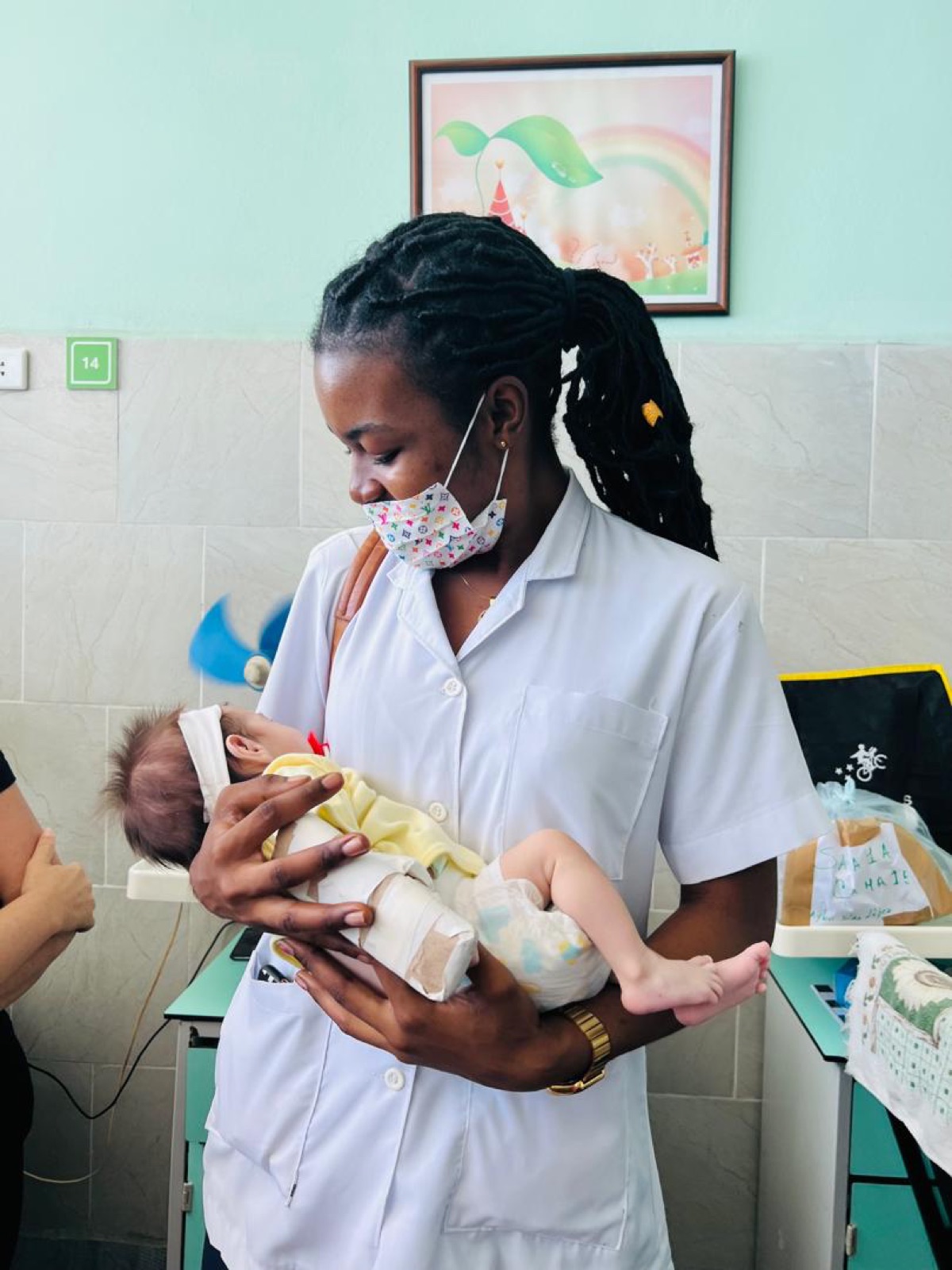
She did not treat the mother as a case; she treated the case as a mother. That distinction, in our specialty, is not stylistic — it materially affects how a woman experiences a first delivery and, frankly, how safely it proceeds. — Dr. Pabla Milena Zúñiga De La Hoz
What I remember of it is not the mechanics, which I had rehearsed. It is that I kept talking to her the whole way through. That is usually the first thing to disappear when an intern is nervous — the patient becomes a procedure and the room goes quiet — and it is the thing worth protecting, because a frightened woman who does not know what is happening pushes differently.
Emergency triage
Triage cases requiring rapid judgement about admission. Early in the rotation I assessed a woman at nineteen weeks' gestation presenting with signs of threatened abortion. I did not soften the finding or defer the decision. I presented it clearly to the resident on shift, and the patient was admitted for the supervision and targeted treatment she would otherwise not have received that day.
I also managed the prevalent lower and upper genital tract infections that dominate our triage volume — exercising antibiotic judgement carefully rather than reflexively, and following up culture results where they were pending, which is the half of antibiotic stewardship that gets skipped on a night shift.
The under-calling problem
Obstetrics is a discipline in which the most consequential decisions are made about patients who look well. A woman presents, she is walking and talking, and the whole question is whether she goes home or is admitted.
Interns get this wrong in a predictable direction. They under-call, because admitting a patient who turns out to be fine feels like an error, while discharging a patient who later deteriorates feels merely like misfortune. Those two feelings are not proportionate to the two outcomes, and the asymmetry is the trap.
I do not think this way, and I can trace exactly why. My family's access to treatment once depended on who could be reached and how quickly; I am constitutionally unwilling to let a patient wait to be taken seriously. In a specialty where the interval between “she seems well” and an emergency can be very short, that is a clinical asset rather than a temperamental quirk.
What I took from it
Obstetrics rewards, above everything else, the physician who will admit the woman who could easily have been sent home — and who will then still be the person who talks her through the delivery.
It is the only rotation where the same shift asked me for both dispositions in the same hour, and it is the one that most changed how I think about what composure is for.